
Breeding for Predictability at Hauiti Farm, Hawke’s Bay
Article written and photographed by Sarah Horrocks — AngusPRO Magazine 2026
On a 215-hectare (effective) Hawke’s Bay block in the North Island of New Zealand, a commercial beef producer is running his operation with the discipline of a stud. The results are making people sit up and take notice.
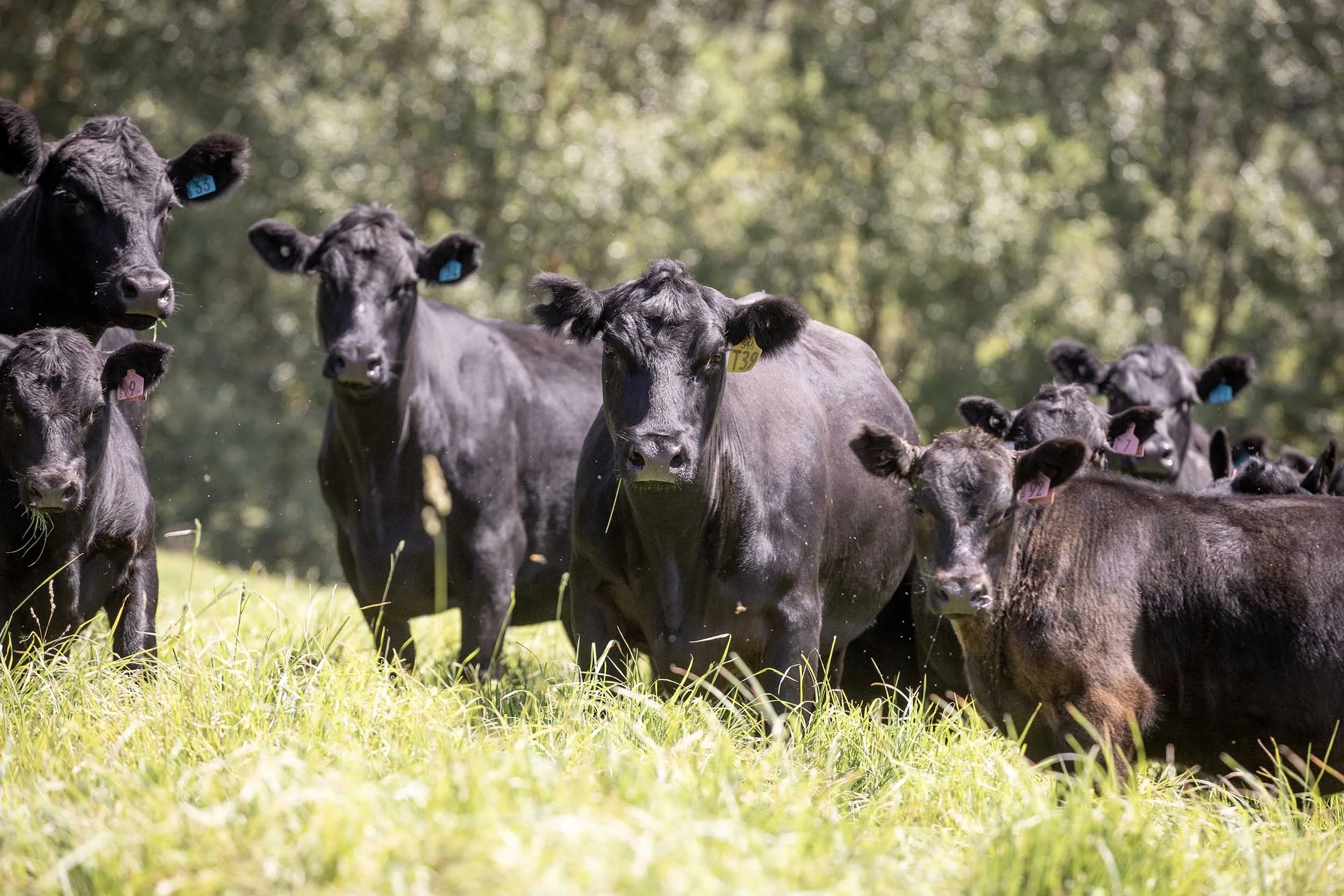
Wayne Breeze is not a man who does things by halves, and the banker, turned farmer, is determined to squeeze every drop of juice out of his operation. At Hauiti Farm in Poukawa, Hawke’s Bay, he has built a beef finishing system that most commercial operators would consider the domain of elite stud breeders. Everything is weighed at birth. Genetics are matched with the precision of a stud programme. Kill sheet data flows back up the supply chain to inform the next generation of sire selections. And every steer on the place is targeted to finish prime on grass, at 340 to 350 kilograms carcase weight, in under 18 months.
The objective, as Wayne states it plainly, is predictability. Predictability in the animal, predictability in the feed, and predictability in the commercial outcome. It is a word he returns to throughout our conversation, and it is the thread that connects every decision made on the farm.
"Increased beef per hectare and the shorter you can finish them, the better," says Wayne.
"Predictability relates to both the animals, via genetics, and the feed produced so that we can grow them out.”
The Genetic Foundation
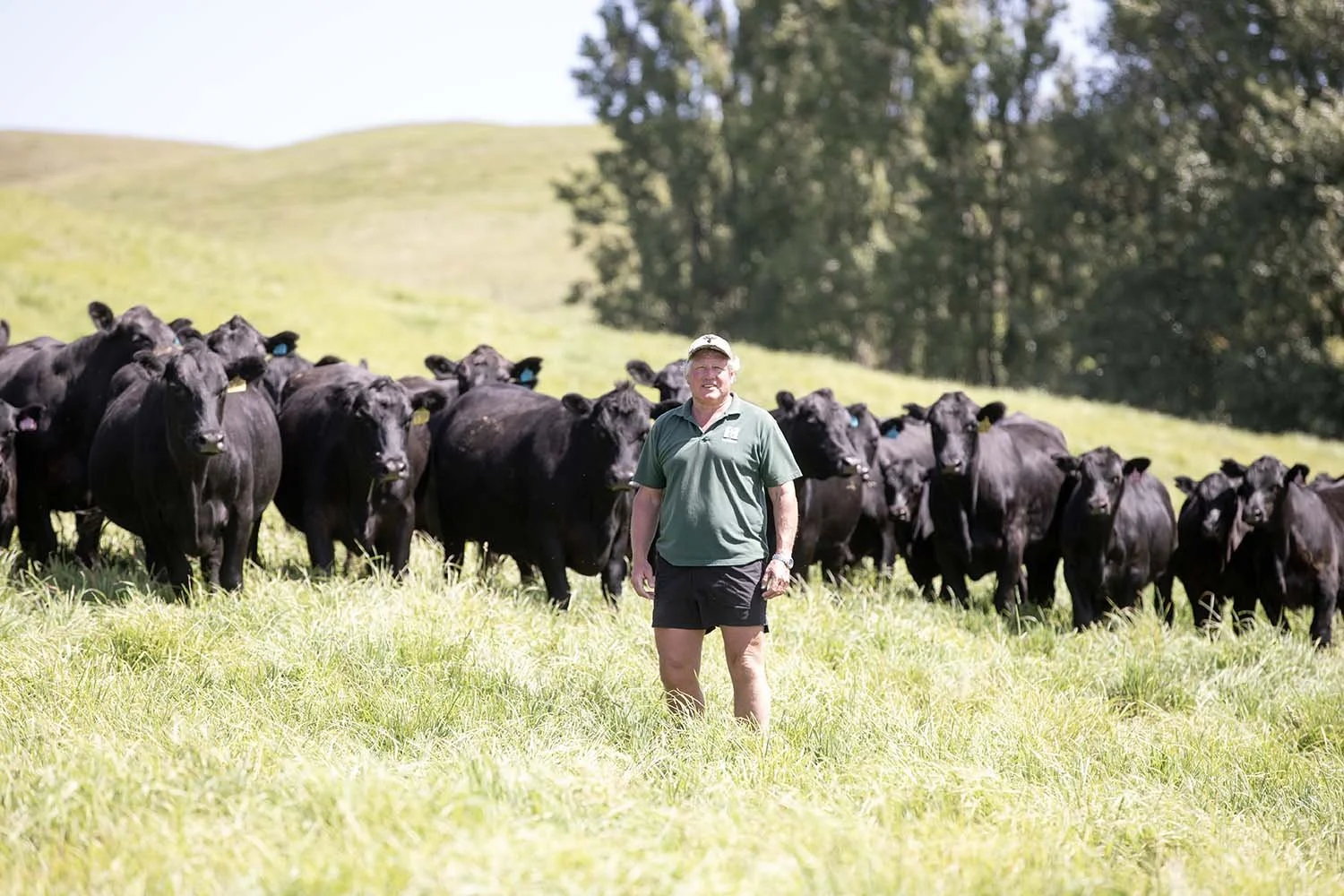
Hauiti Farm runs as a closed commercial system in close association with Te Mania Angus (NZ), one of New Zealand's leading Angus studs. The relationship began with bull purchases, but Wayne quickly realised that putting elite genetics over an unknown cow base was limiting the programme's potential.
"Even if you pick great bulls with good genotype, if you don't know what they're covering, I don't know how you can expect good results.”
The issue, as Wayne understood it, partly came down to epigenetics. The cow's influence over her progeny extends well beyond the DNA she passes on. Nutrition, environment, and management experienced by the dam directly modify gene expression in her offspring, with effects that can carry across generations. Wayne is clear on what this means in practical terms: the female is the most important part of the equation, accounting for approximately 75 percent of the epigenetic influence on the calf.
So once he decided he needed to sort out his cow herd, Wayne worked with Will Wilding at Te Mania and genetic advisors Targeted Breeding, led by Jo Scott, to replace his original mixed-background cow herd with surplus Te Mania females. The replacements were not culls. Wayne and Will selected the cows together, with a clear shared objective. He wanted fast finishers.
"Why shouldn't we be able to utilise the same genetic knowledge and technology that the studs are using? It's available.”
The cow herd was replaced two years ago in 2024. Targeted Breeding now applies the same sire-matching principles to Hauiti’s cows that they would use in a stud environment, with the difference being that the progeny are destined for commercial beef production rather than the bull sale ring. Hauiti currently runs 171 females to the bull each year, including yearling heifers.
Sire selection draws on full genotype data with high accuracy figures. MateSel sire selection technology is used to ensure the right bulls go over the right females, optimising the desired outcome at an individual pairing level rather than applying a blanket bull-to-mob approach. Wayne's herd will also be registered with Angus Australia as an APR herd in the coming months, bringing further structure and traceability to the programme.
The follow-up bulls are all Te Mania bulls, and Will is assisting to ensure the right sires are selected for both the females at Hauiti and the desired finishing outcome.
AI and Conception Rates
Artificial insemination is part of the programme, though Wayne is candid about the variable results they have experienced so far. The first AI run on the cow herd returned an 88 percent conception rate, a result he was told at the time was unusually strong. More recently, the heifer mob returned just 43 percent, which was obviously disappointing.
The outcome was compounded by a follow-up bull being injured, which left a proportion of the heifers dry. It was a reminder that even the most carefully designed genetic programme carries biological and logistical variables that do not always cooperate.
Wayne notes that the skill of the technician applying the AI semen carries a significant influence on conception outcomes. Human execution remains a critical link in the chain.
The Finishing Target: One Winter, Prime Grade
The commercial logic of the Hauiti system centres on a single, powerful metric: finishing steers in one winter rather than two. Wayne has done the arithmetic carefully.
"If you do the numbers, having your finishing stock do only one winter increases the MA carrying capacity by 25 to 30 percent, which then increases your gross turnover by 25 to 30 percent.”
Calves born in August and September are targeted to hit 340 to 350 kilograms carcase weight by January/February of the following year, with the balance finishing by late March. That puts the steers through a single winter before processing, cutting out a full year of feed conversion at a less efficient stage of growth, freeing up pasture for additional stock, and reducing the amount of winter cropping required.
The initial programme was designed to finish steers at 17 to 18 months. In practice, Wayne found he needed to pull the first draft earlier, at around 15 to 16 months, to prevent the faster growing animals from exceeding the premium weight grade window. It is a good problem to have.
Average daily liveweight gain from birth to weaning sits between 1.06 and 1.12 kilograms per day. From there, the target is to hold above one kilogram per day through to the finishing phase, where the steers are recording gains of 1.4 to 1.5 kilograms per day.
The processing yield is also worth noting, achieving 53.74% average in the February 2025 killed steers, and increasing to 54.9% average in the February 2026 killed steers. Wayne finds the yield increases by 2-3% as they come into autumn each year.
All stock is processed through Silver Fern Farms at Whakatu. The progeny consistently grade into Silver Fern Farms' EQ specification, driven by intramuscular fat levels that Wayne attributes to the genetic programme and the feeding system working together. He is looking to push IMF performance further still, positioning the herd ahead of any premium market opportunities that may develop.
"New Zealand currently has a bulk commodity market for buying cattle for processing," he says.
"We produce highly certified beef that is overqualified for the prices being paid. That has to be fixed."
He sees it as a ‘chicken and egg’ situation: the premium market requires a product to attract consumers, but processors will not pay premium prices until consumers are already paying them. His response is to be ready when the equation shifts.
Cow Condition and the Feed Efficiency Equation
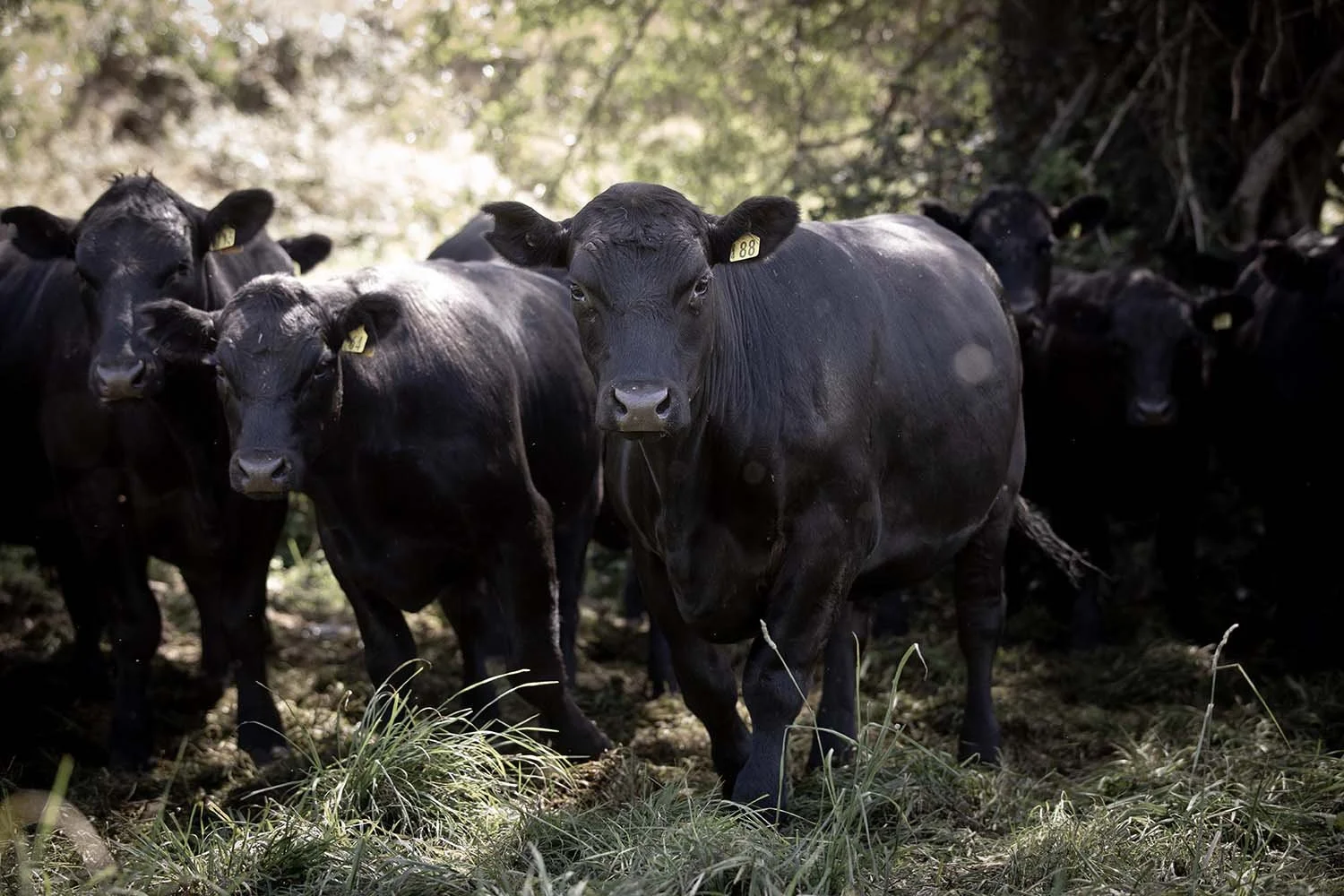
A central belief in Wayne's system is that capital stock must never be allowed to take a backward step in body condition. His cows are fed well throughout the year, without compromise. The reasoning is grounded in both Beef and Lamb New Zealand research and epigenetic science.
"Putting a kilo onto a cow requires six to eight times more feed than is required to put a kilo on a calf. We just don't let the girls get hungry, which also means they're even better mothers.”
Maintaining cow condition means the breeding females are not competing with the finishing progeny for feed. It also means calves are not compromised during gestation, allowing intramuscular fat development to proceed without interruption in utero. Wayne is clear that calves born from well-conditioned, well-fed cows go on to finish faster and more consistently than those that start life at a nutritional deficit.
Calves do stall at weaning in terms of growth rate, but they do not go backwards. That baseline is protected by the cow management approach, and it sets the platform for the daily gain targets through the finishing phase.
Cow size is also managed deliberately. The herd averages 612 kilograms liveweight, and Wayne has no interest in running heavier cows. A larger-framed cow consumes more feed to maintain condition without a proportionate return in productivity. In a system built around feed conversion efficiency, every kilogram of cow weight carries a higher ongoing feed cost.
Pasture, Soil, and Low-Input Philosophy
The feed system underpinning Hauiti's performance is grass-based and deliberately low in purchased inputs. Wayne runs high pasture covers and pays close attention to what is happening beneath the sward surface. Visual soil assessments are a regular practice on the farm.
"We dig a lot of holes," he laughs.
Nitrogen application is kept to a minimum. Wayne relies on clover to do the nitrogen fixation work, using artificial nitrogen down the shoot when re-grassing. The rationale is straightforward: a healthy soil biology supporting a strong clover content delivers the same result at a fraction of the cost, without disrupting the soil ecology that underpins long-term pasture performance.
After each grazing rotation, harrows are run through the paddocks. The practice serves two functions. It spreads cattle dung across the pasture as a nutrient source, and it eliminates the bare patches that form where a dung pat sits, which would otherwise become thistle strike points months later. On an intensive hill country block, the flow-on benefit to pasture quality over successive seasons is meaningful.
The bottom of the property is a river flat carrying willows, which provide the equivalent of bales of summer feed for the finishing steers without any cultivation or supplementary feed cost.
Fencing infrastructure is managed with the same cost-conscious approach. Wayne sources ex-vineyard grape posts at one dollar each. These tanalised posts cannot be landfilled or burned, making them essentially worthless to the vineyard sector. With Hawke’s Bay's wine industry making a shift toward steel posts in the coming years, Wayne expects a significant and ongoing supply of low-cost fencing material. Not running any sheep means a simple post and two wire fence for block delineation within larger paddocks meets his requirements, keeping infrastructure costs well below those of a traditional sheep and beef block.
Data, Feedback Loops, and the Commercial Control
Wayne describes Hauiti Farm as a commercial control operation relative to Te Mania NZ's stud operation. Kill sheets go back to Te Mania after each processing run, feeding carcase data into the stud's own records. Te Mania contributes monitoring data from the dam side, and that information flows back through the system. The relationship is collaborative and data-driven in both directions.
Te Mania's Vytelle system supports feed intake and efficiency monitoring on the stud side, building a body of information that Wayne can draw on without needing to replicate the infrastructure himself. He is direct about New Zealand's position in this space: the country is not pioneering the research, but working to validate whether findings from other systems are relevant to local pastoral conditions.
On methane, the early data from fast-growing cattle is pointing in an interesting direction.
"Funnily enough, fast-growing cattle produce less methane. That's what the raw data is saying."
His interpretation, while noting that his third form science may not make him an expert, is practical. “Feed energy either converts to growth, is belched as methane, or passes out the backend.”
A more efficient converter simply has less to lose. From an emissions standpoint, cattle that finish on grass in 15 to 16 months surely represent one of the lowest-footprint beef production systems in the world. This is surely a question that must be asked…
He does not overlook the genetic diversity question. Wayne holds concerns about the concentration of genetics across the New Zealand dairy industry, and applies the same thinking to his own programme: individual bulls, matched precisely to individual females through tools such as MateSel, rather than broad genetic concentration across a herd.
What Comes Next
The Hauiti herd is young. With the herd of predominantly heifers purchased only two years ago, the age structure is weighted toward the younger end of the scale. The target cow exit policy is to sell cows at five years of age, in calf, with a fully documented genetic history and a predictable expected finishing outcome for the calf on board.
"We want to start exporting [domestically] that predictability off farm, at scale, every year.”
In round numbers, Wayne expects to scale up further and be moving 80 to 100 females annually. The closed herd is currently retaining most heifers as replacements, building toward a point where the scale of the programme justifies regular commercial sales of foundation females.
Embryo transfer was considered and set aside. Wayne's concern was the epigenetic influence of the recipient dam, which would complicate the very consistency he is trying to build. Starting with actual genetic mothers kept the programme clean and the data interpretable.
At 240 hectares, Hauiti Farm is not a large operation by Hawke’s Bay standards. But the system Wayne has built on it, by combining elite genetics, disciplined pasture management, low-input infrastructure, and a genuine commitment to data, is producing results that scale well beyond what most would consider achievable on a commercial finishing block.
The numbers back it up. One winter to premium grade and a kill sheet that keeps improving. Predictability, as Wayne Breeze would say, is the point.